Compare your deck to Nubank

Compare Your Deck

Nubank Pitch Deck (2014)

Fintech
Stage: Various
Raised: Multiple
Year: 2014
Slides: 13
Outcome: IPO at $41B valuation

Pitch Deck

1 / 13
Nubank pitch deck - Cover and positioning: clarity of identity
Click to expand

Deck Analysis

This 2014 Nubank pitch deck presents an early-stage fintech play that frames the company as a technology-first challenger to Brazil's incumbent banks. It combines clear positioning (the anti-bank), market timing, product/brand strategy, a simple business model, and an ask for seed capital. The deck stands out for marrying emotional brand messaging with operational detail — an approach that helped Nubank scale from startup to a multibillion-dollar public company.

Cover and positioning: clarity of identity

Cover and positioning: clarity of identity

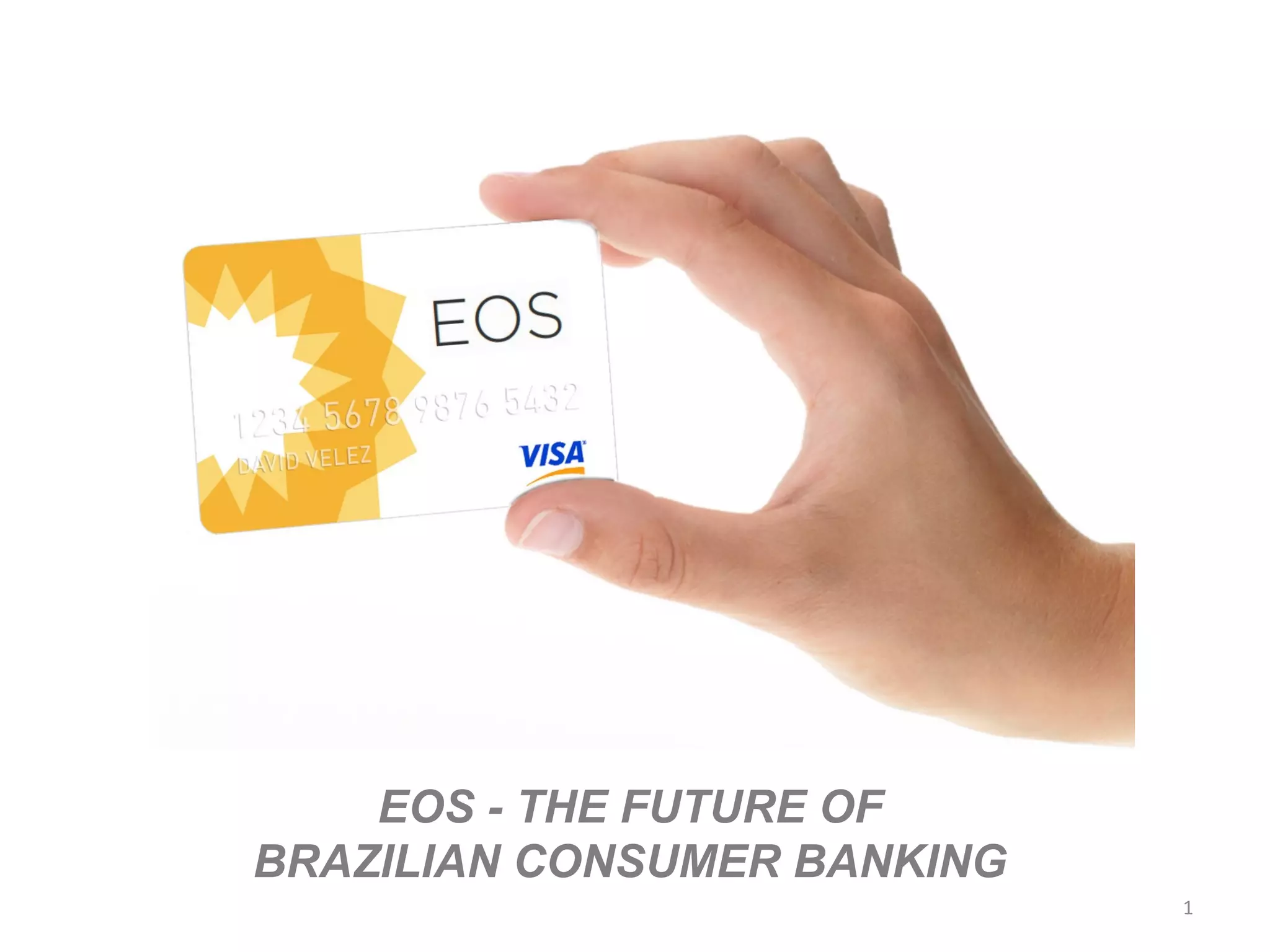
The first slide is a clean visual: a card held in a hand and a short tagline that positions EOS (Nubank) as the future of Brazilian consumer banking. It sets a confident tone and signals the product focus immediately: a modern card and consumer banking experience. The design is minimal and intentional, communicating product-first thinking rather than financial jargon.

The lesson for founders is that the cover should communicate core identity in one image and a short line. Nubank's early cover does this well by showing the product and hinting at disruption, preparing the audience for a deck that balances brand with business detail.

Key Takeaway: Open with a simple, product-forward visual and one-line positioning to anchor the audience quickly.
The Big Picture: framing incumbents vs challenger

The Big Picture: framing incumbents vs challenger

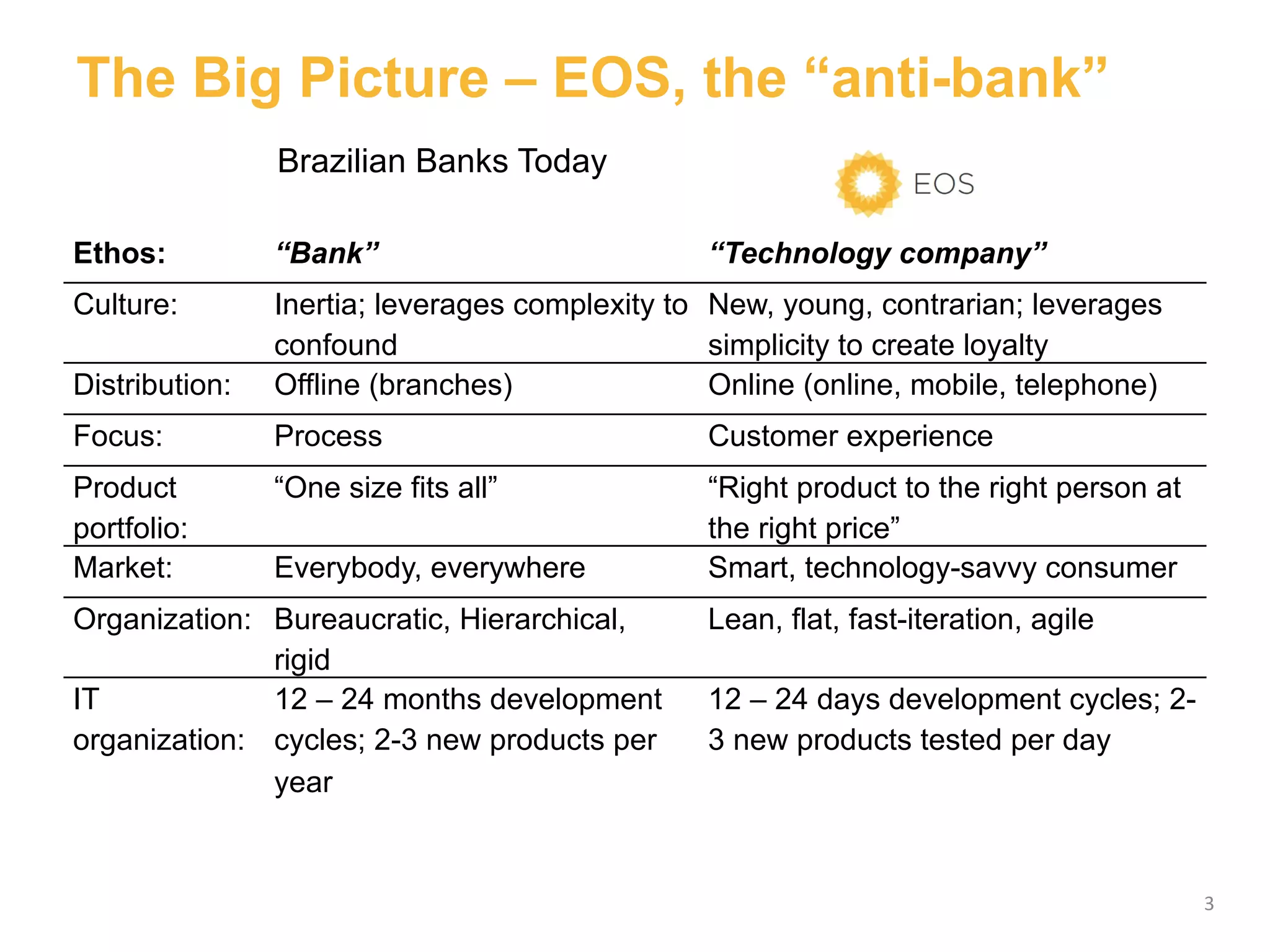
Slide 3 (the comparative table) lays out a concise, strategic narrative: established banks are process-driven, branch-focused and bureaucratic, while Nubank positions itself as a technology company that leverages simplicity, agility and customer experience. This juxtaposition converts an abstract claim of disruption into concrete operational contrasts across culture, distribution, product, market and IT cycles.

Founders can learn from this approach: a short, structured comparison shows why incumbents are vulnerable and which specific advantages the startup brings. It also helps investors assess defensibility and execution risk by linking cultural choices to measurable outcomes like development cycles and product iteration speed.

Key Takeaway: Use a simple comparison table to show exactly how your model breaks incumbent assumptions and where you have sustainable operational advantages.
Solution and product/brand balance: brain versus heart

Solution and product/brand balance: brain versus heart

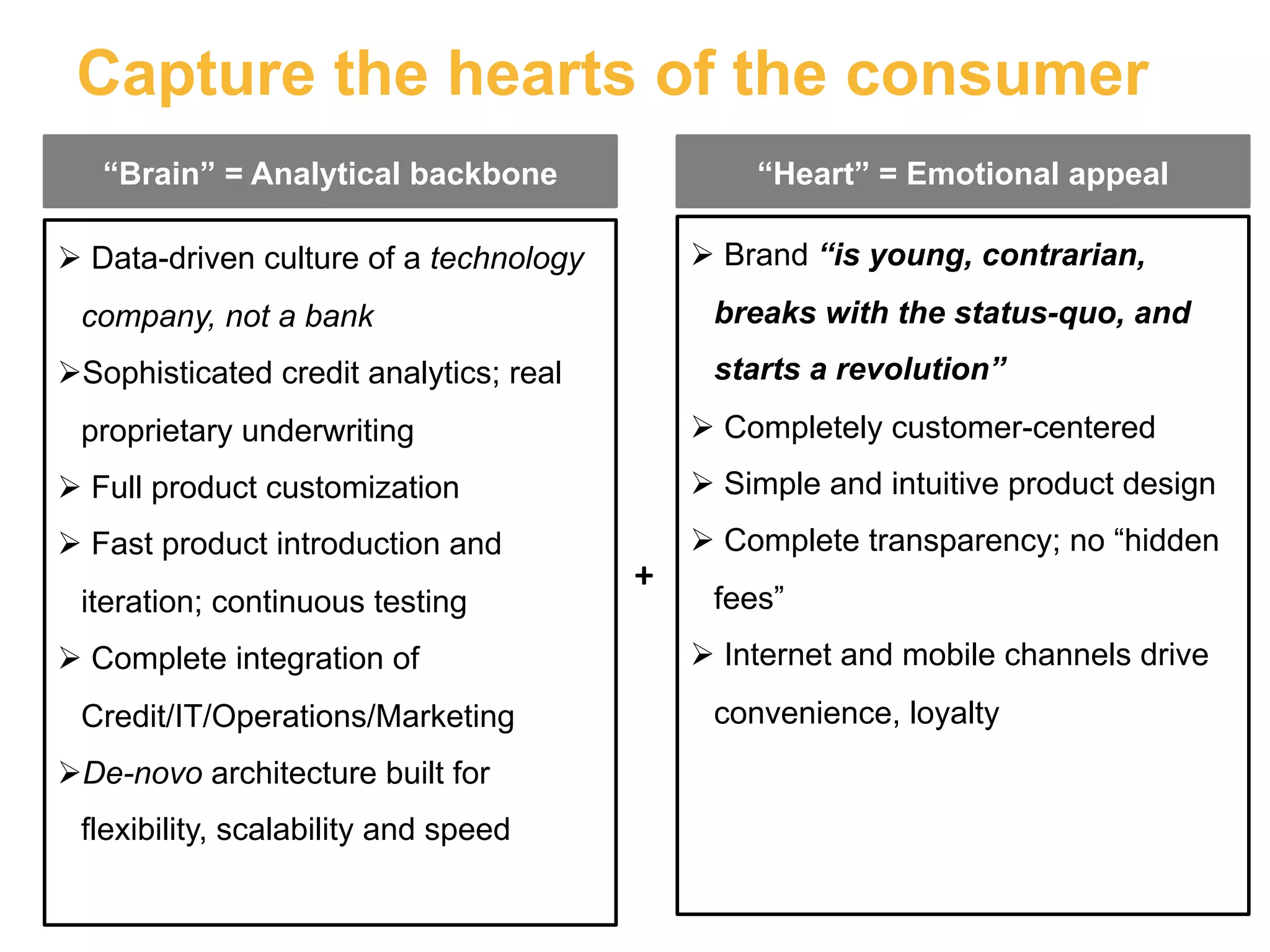
The slide that contrasts the 'brain' (analytical backbone) with the 'heart' (emotional appeal) is one of the deck's most instructive elements. It communicates that Nubank is not solely a credit or payments product; it is a combination of data-driven underwriting, rapid product iteration and a brand that resonates emotionally with younger consumers. The dual-column framing helps investors see both technological defensibility and go-to-market differentiation.

For founders, the key takeaway is to show both sides of your business: the hard, technical moat and the softer, brand-led adoption engine. Presenting them together — with clear bullets on analytics, architecture and customer experience — reduces the chance investors view the startup as one-dimensional.

Key Takeaway: Explicitly present your technical defensibility and brand/marketing strategy side-by-side so investors understand both how you win and why customers will care.
Why now: timing and market forces

Why now: timing and market forces

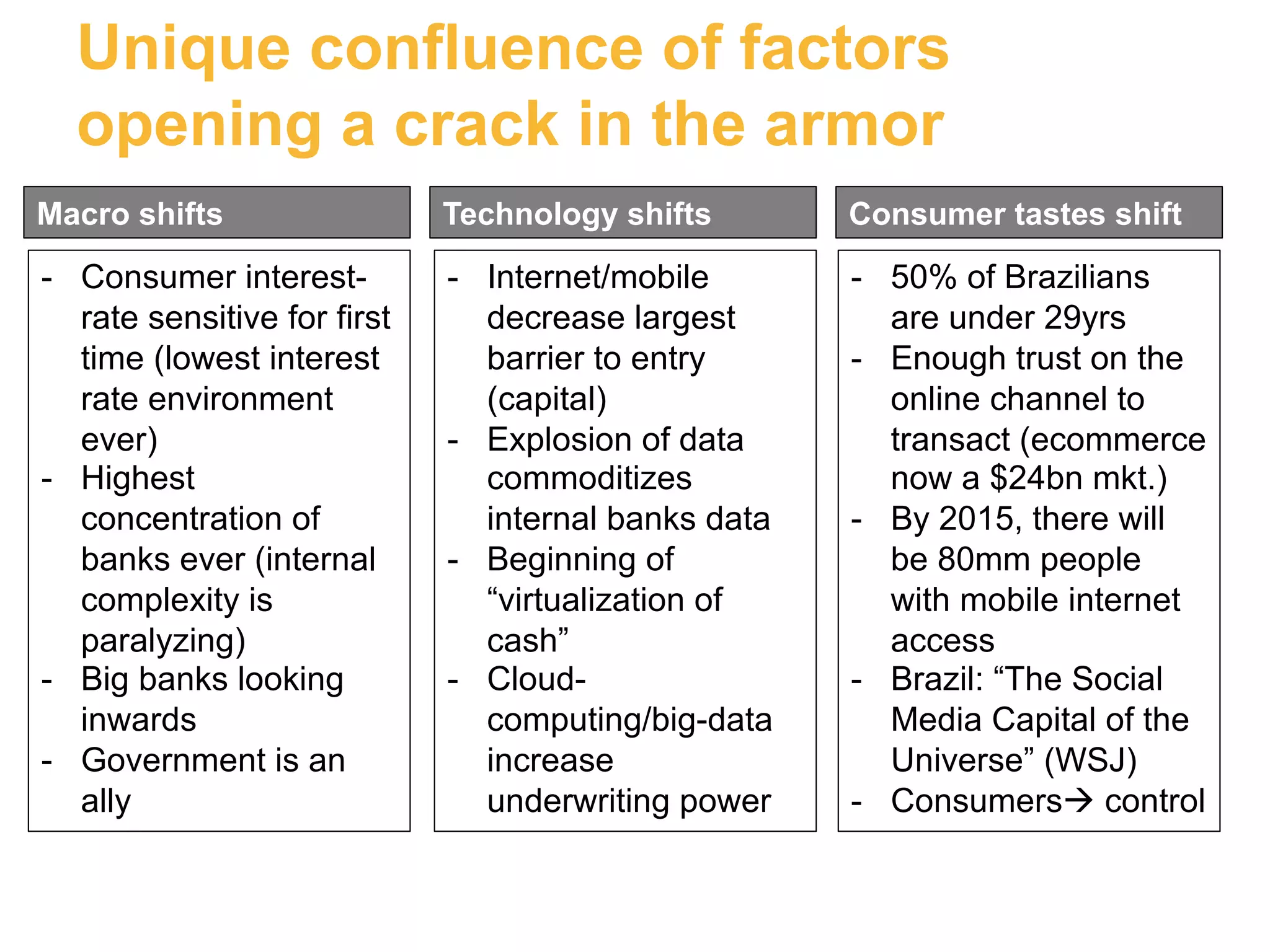
The 'Why Now' content (unique confluence of factors) lays out macro shifts, technology shifts and consumer taste shifts that create a window of opportunity. The slide cites low interest rates, concentrated incumbents, mobile and cloud adoption, explosive data availability and a young, digitally native population — all tailored to Brazil but framed in a way that shows a durable market opening.

This is effective because it ties the startup's plan to broader, verifiable trends rather than optimistic assumptions. Founders should follow this model by tying their product to multiple independent tailwinds and quantifying them where possible; it strengthens the narrative and helps investors understand timing sensitivity.

Key Takeaway: Show multiple, independent tailwinds that validate market timing and reduce the 'idea in a vacuum' risk.
Business model: simple, realistic revenue breakdown

Business model: simple, realistic revenue breakdown

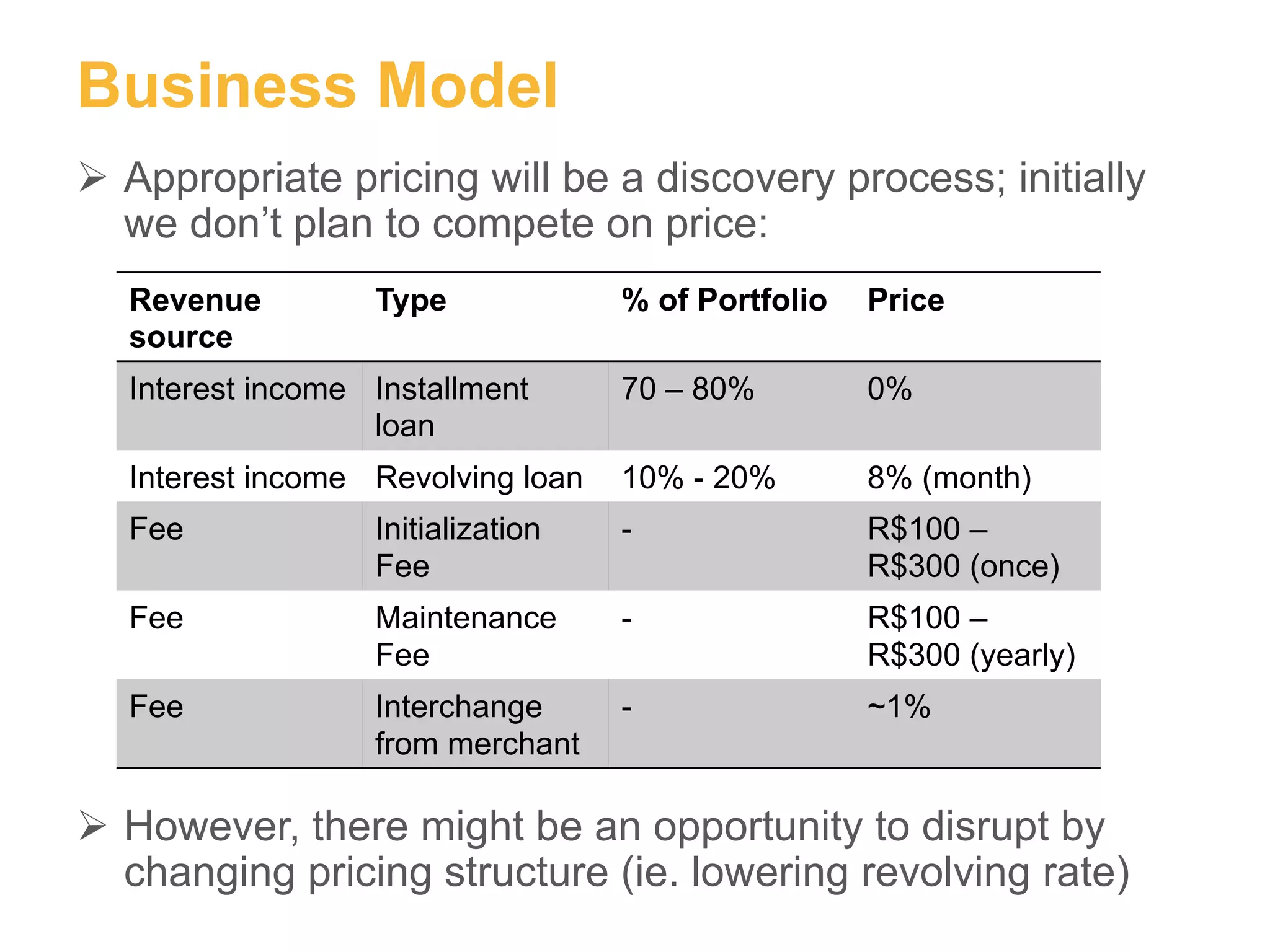
The business model slide presents a pragmatic revenue mix: most volume comes from installment interest (70-80%), with revolving interest and service fees contributing additional streams. The use of a table to show revenue source, type, portfolio percentage and price makes unit economics and pricing intentions explicit. The slide also notes a strategic choice not to compete on price initially, indicating a focus on customer acquisition and product/experience.

Founders should take from this the value of clarity on monetization early in the deck. Even if numbers are approximations, showing where revenue will come from and the levers you can pull (pricing, mix) gives investors something concrete to underwrite and stress-test.

Key Takeaway: Be explicit about revenue sources and composition; a simple table of monetization makes your assumptions easy to evaluate.
Inception and ask: early team and execution plan

Inception and ask: early team and execution plan

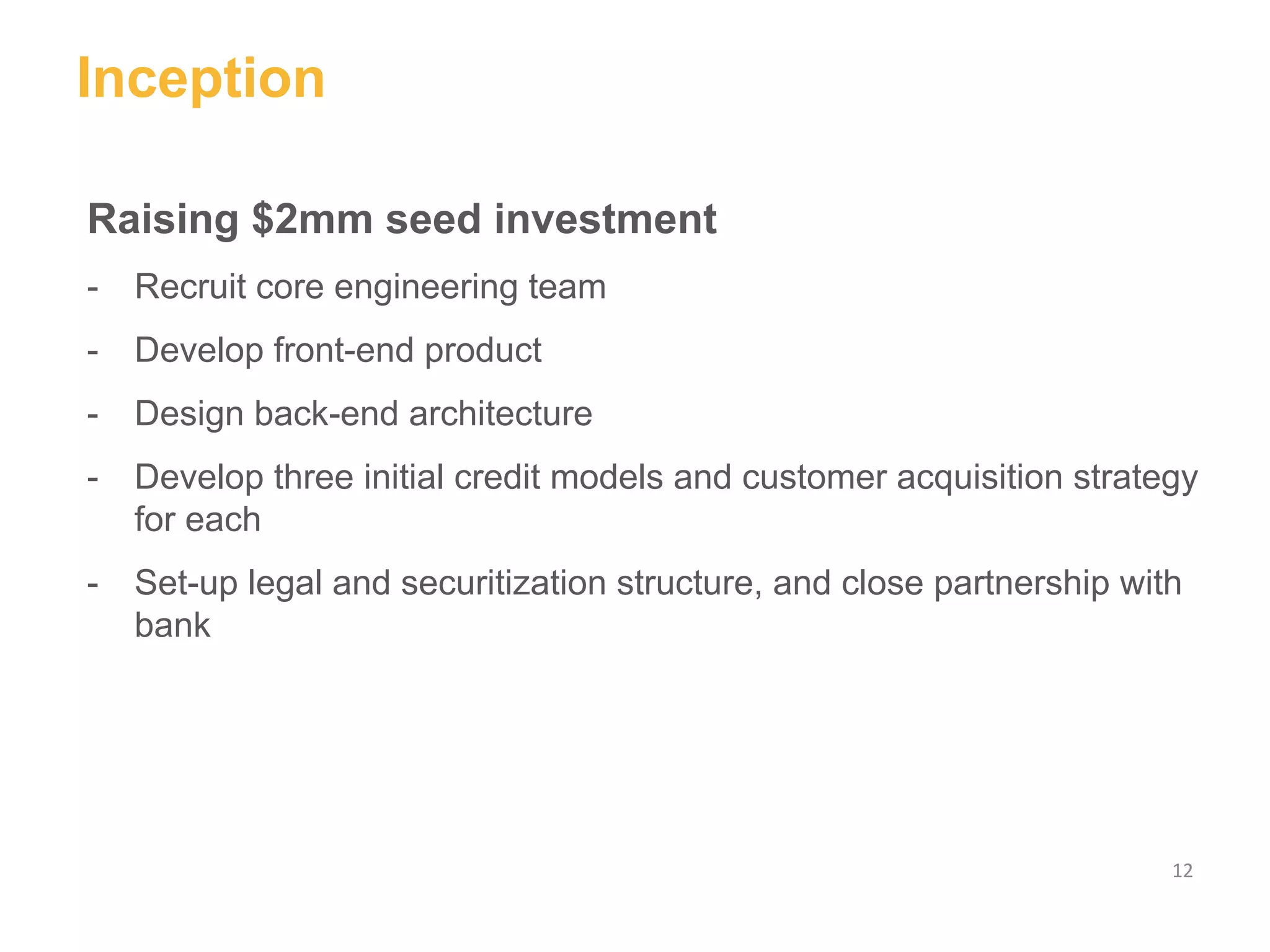
The inception slide is an operational ask: raising $2M to recruit an engineering team, build front-end and back-end architecture, develop credit models, and set up legal/securitization. This transitions the deck from strategy to execution and clarifies what the seed capital buys. It signals the founders understand the concrete milestones needed to de-risk the business.

Investors want to see that funding requests map to deliverables with measurable outputs. Founders should mirror this: link the raise to specific hires, development milestones and regulatory/legal steps. That creates accountability and makes follow-on financing or valuation growth more credible.

Key Takeaway: Map your funding ask to concrete milestones and hires so investors can see how capital directly reduces risk.

Conclusion: Key Lessons

Nubank's early deck succeeds by combining a crisp brand identity, a clear articulation of why incumbents are vulnerable, and practical operational details that show how the company will execute. The best parts are the side-by-side messaging (technology and brand), the timing narrative anchored in macro and tech shifts, and the explicit funding-to-milestone ask. For founders, the actionable advice is to be simultaneously visionary and granular: lead with a memorable positioning, justify it with trend-driven timing, prove defensibility with technical and data plans, and close with a concrete use of funds tied to measurable milestones.

When you build your own pitch deck, emulate Nubank by keeping slides visually simple, using structured comparisons to highlight advantages, and presenting monetization and execution in tables or lists investors can quickly model. Avoid vague promises; instead, map capital to hires, product features and regulatory steps so your narrative converts directly into an investment case.

Full Deck Analysis

12 sections

Overview

Company: Nubank
Round: Various (Multiple)
Year: 2014
Outcome: IPO at $41B valuation
Product: EOS credit card and mobile banking platform

Executive Summary

Nubank’s 2014 pitch deck presents a compelling vision to disrupt Brazilian consumer banking through a technology-first, customer-centric approach. The deck positions EOS as an “anti-bank”—leveraging mobile/internet distribution, proprietary credit analytics, and radical transparency to capture market share from incumbent banks paralyzed by complexity and legacy systems. While the deck excels at market positioning and timing analysis, it notably lacks traction metrics, team credentials, and detailed unit economics, relying instead on strategic vision and market tailwinds to justify a $2mm seed investment that would eventually grow into a $41B company.

Problem Statement

The Core Problem (Slides 1-4):

Traditional Brazilian banks are fundamentally broken for consumers:

  • Culture of complexity: Incumbents leverage complexity to confound customers (Slide 3)
  • Slow innovation: 12-24 month development cycles vs. market need for rapid iteration (Slide 3)
  • Misaligned incentives: Banks optimize for internal processes, not customer experience (Slide 3)
  • Concentrated market: Highest bank concentration ever, creating internal paralysis (Slide 8)

Market Characterization:
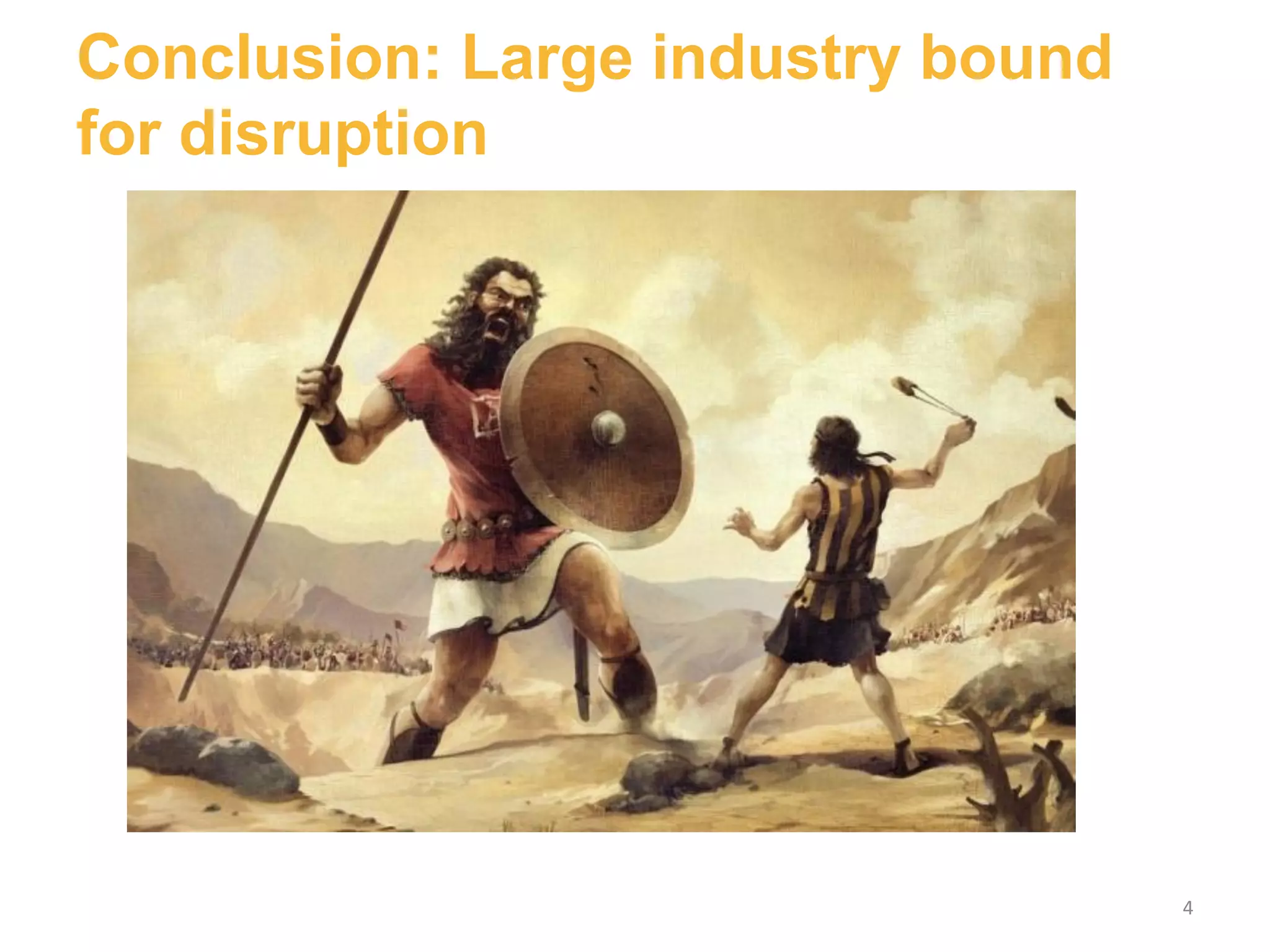
The deck frames this as a “David vs. Goliath” opportunity (Slide 4)—large incumbents are vulnerable despite size because they’re structurally incapable of competing on speed, simplicity, and customer-centricity.

Specific Problem Articulation:

  • No explicit “unbanked” or “underbanked” population statistics provided
  • Focuses on quality of service problem rather than access problem
  • Targets tech-savvy, young consumers (50% of Brazil under 29) dissatisfied with incumbent experience

Solution

The Brain + Heart Framework (Slide 6):

Nubank’s solution combines rational and emotional differentiation:

Brain = Analytical Backbone

  • Data-driven culture of a technology company, not a bank
  • Proprietary credit analytics and sophisticated underwriting (unspecified details)
  • Full product customization based on customer data
  • Fast iteration: 12-24 day development cycles; 2-3 products tested per day
  • Integrated operations: Credit/IT/Operations/Marketing fully integrated
  • De-novo architecture built for flexibility, scalability, and speed

Heart = Emotional Appeal

  • Brand positioning: “Young, contrarian, breaks with status-quo, starts a revolution”
  • Customer-centric design: Simple, intuitive product experience
  • Radical transparency: No hidden fees (though contradicted by fee structure on Slide 10)
  • Digital-first distribution: Internet and mobile channels drive convenience and loyalty

Product Manifestation:
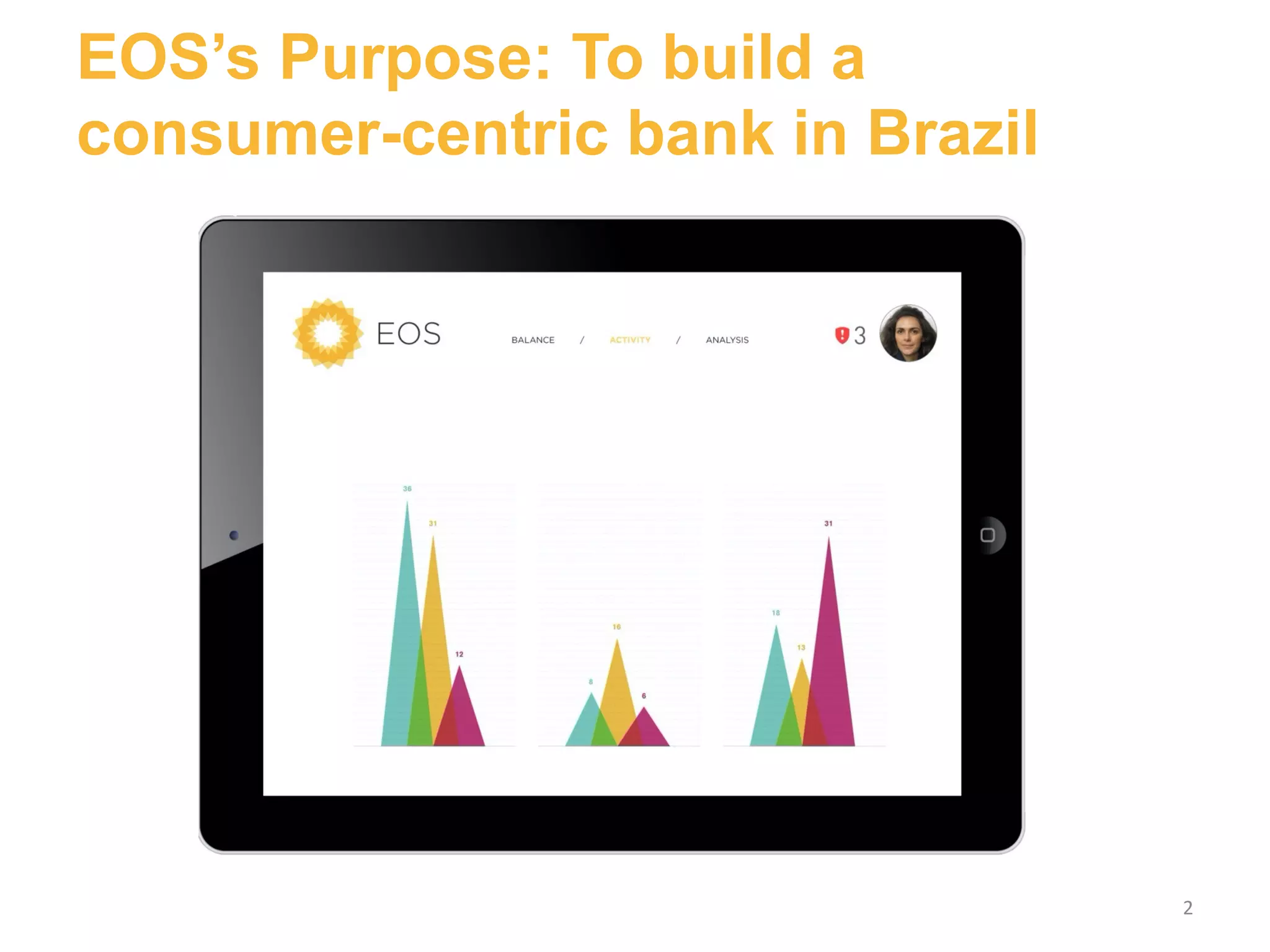
The EOS credit card (Slide 2) demonstrates the solution through:

  • Mobile app with spending analysis and financial insights
  • Clean, modern UI emphasizing simplicity
  • Real-time balance, activity, and analysis views

Market Opportunity

Market Size & Tailwinds (Slide 8):

The deck identifies a “unique confluence of factors” creating a disruption window:

Macro Shifts

  • Interest rate environment: Lowest rates ever—consumers price-sensitive and receptive to new credit products
  • Bank consolidation: Highest concentration of banks ever; internal complexity paralyzing incumbents
  • Regulatory support: Government positioned as an ally (unspecified details)

Technology Shifts

  • Mobile/internet as capital reducer: Internet/mobile eliminate largest barrier to entry (physical branches)
  • Data commoditization: Explosion of data commoditizes incumbent banks’ proprietary data advantages
  • Cloud computing & big data: Enable sophisticated underwriting without legacy infrastructure
  • Cash virtualization: Beginning of shift away from physical cash (unspecified)

Consumer Shifts

  • Demographic tailwind: 50% of Brazilians under 29 years old
  • Digital trust: Consumers trust online channels for transactions (ecommerce = $24 billion market)
  • Mobile penetration: By 2015, 80 million people with mobile internet access
  • Social media adoption: Brazil = “Social Media Capital of the Universe” (WSJ)
  • Control preference: Consumers increasingly demand control over financial products

TAM/SAM/SOM:
The deck does not provide explicit TAM/SAM/SOM analysis. Market opportunity is implied through:

  • $24 billion ecommerce market (proxy for digital trust)
  • 80 million mobile internet users by 2015 (addressable market)
  • 50% of population under 29 (target demographic)
  • No explicit Brazilian banking market size provided

Business Model

Revenue Streams (Slide 10):

Revenue Source Type % of Portfolio Price
Interest income Installment loan 70–80% 0%
Interest income Revolving loan 10–20% 8% per month (~96% annually)
Fee Initialization Fee - R$100–R$300 (one-time)
Fee Maintenance Fee - R$100–R$300 (yearly)
Fee Interchange from merchant - ~1%

Pricing Strategy:

  • “Appropriate pricing will be a discovery process; initially we don’t plan to compete on price” (Slide 10)
  • Upside case: Decrease revolving rates to incentivize customers to carry balances (shifting portfolio mix toward higher-margin debt)
  • Base case: Operate with 60–80% installment mix (matching market reality)

Unit Economics:
Not provided. The deck lacks:

  • Customer acquisition cost (CAC)
  • Lifetime value (LTV)
  • Churn assumptions
  • Credit loss/default rates
  • Break-even analysis
  • Path to profitability

Critical Business Model Risk (Slide 11):

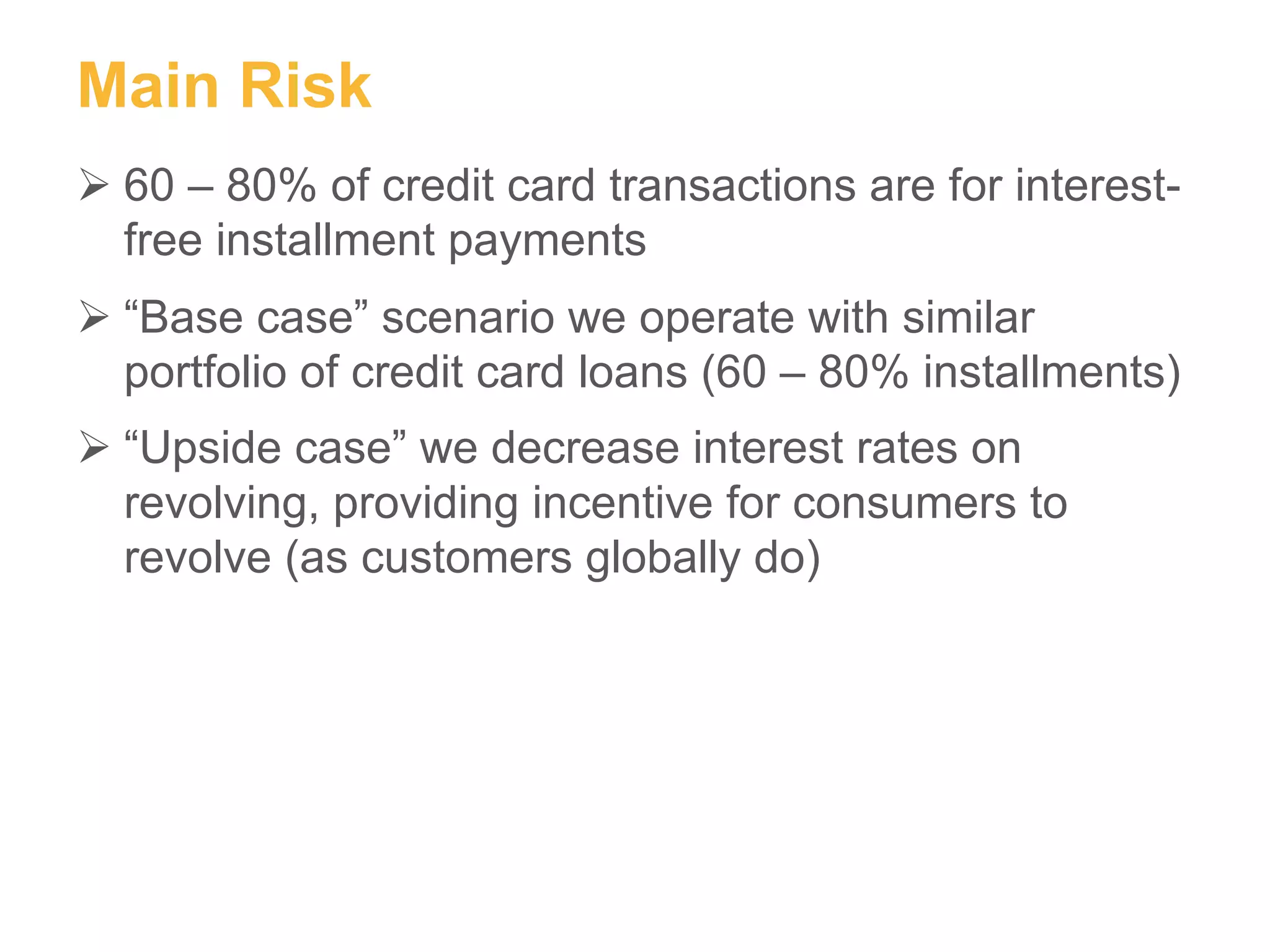
  • 60–80% of credit card transactions are interest-free installments
  • This is the market reality in Brazil
  • 0% installment loans generate no revenue—profitability depends on revolving debt mix and fees
  • Founders acknowledge this risk but offer limited mitigation detail beyond “lower revolving rates to incentivize revolving”

Traction & Metrics

Traction: None Provided

The deck contains zero traction metrics:

  • No user numbers
  • No customer acquisition data
  • No revenue figures
  • No product launch date
  • No beta user feedback
  • No partnerships announced (beyond vague “bank partnership” reference)

Inference:
This appears to be a pre-launch seed deck (likely early 2014), positioning Nubank before significant traction. The $2mm seed was intended to build the product and acquire initial customers, not scale an existing user base.

Historical Context:
Nubank later achieved massive traction:

  • Millions of users by 2016-2017
  • Became Brazil’s largest fintech by user count
  • Expanded to Mexico and Colombia
  • Achieved $41B IPO valuation (2021)

But none of this is reflected in the 2014 deck.

Competitive Positioning

The “Anti-Bank” Positioning (Slide 3):

Nubank differentiates across seven dimensions:

Dimension Traditional Banks EOS/Nubank
Ethos “Bank” “Technology company”
Culture Inertia; leverages complexity New, young; leverages simplicity
Distribution Offline (branches) Online (mobile, internet, phone)
Focus Process optimization Customer experience
Product Portfolio “One size fits all” “Right product to right person at right price”
Market Everybody, everywhere Smart, technology-savvy consumers
Organization Bureaucratic, hierarchical, rigid Lean, flat, fast-iteration, agile
IT Development 12-24 months; 2-3 products/year 12-24 days; 2-3 products/day

Key Differentiators:

  1. Speed: 100x faster development cycles (12-24 days vs. 12-24 months)
  2. Simplicity: Radical transparency and intuitive design vs. complexity-as-moat
  3. Data: Proprietary credit analytics and underwriting (unspecified)
  4. Distribution: Mobile-first vs. branch-dependent
  5. Culture: Technology company mindset vs. banking bureaucracy

Competitive Moat:

  • De-novo architecture (no legacy system constraints)
  • Data-driven underwriting (proprietary models)
  • Agile organization (flat, fast-iteration)
  • Brand appeal to young, tech-savvy consumers

Competitive Vulnerabilities:

  • Deck doesn’t address how incumbents might respond (price competition, mobile apps, etc.)
  • Assumes incumbents can’t change culture/speed (may be overconfident)
  • No discussion of regulatory/compliance advantages incumbents possess

Team

Team Information: None Provided

The deck contains zero team information:

  • No founder names (except David Velez visible on card mockup, Slide 1)
  • No team credentials or experience
  • No organizational structure
  • No advisory board
  • No relevant banking/fintech background mentioned

Inference:
This is a significant weakness for a seed deck. Investors typically weight team heavily, especially for regulated financial services. The lack of team information suggests either:

  1. Early-stage deck before team was fully assembled
  2. Intentional focus on market opportunity over team credentials
  3. Assumption that market opportunity speaks for itself

Historical Context:
David Velez (founder) later became well-known for building Nubank, but his background/credentials are not mentioned in this 2014 deck.

Go-to-Market Strategy

GTM Approach: Minimal Detail

The deck provides limited go-to-market specifics:

Distribution Channels (Slide 6):

  • Internet and mobile channels drive convenience and loyalty
  • No mention of physical branches or offline channels
  • Implies digital-only acquisition and onboarding

Customer Acquisition Strategy (Slide 12):

  • “Develop three initial credit models and customer acquisition strategy for each”
  • Suggests testing multiple acquisition approaches
  • No specifics on channels, messaging, or CAC targets

Partnership Strategy (Slide 12):

  • “Set-up legal and securitization structure, and close partnership with bank”
  • Implies Nubank will partner with an incumbent bank for deposits/lending infrastructure
  • Suggests regulatory path: operate as fintech with banking partner, not as standalone bank

Missing GTM Details:

  • No marketing budget or strategy
  • No viral/word-of-mouth assumptions
  • No partnership announcements
  • No launch timeline
  • No customer acquisition cost targets
  • No growth projections

The Ask

Funding Round: $2 Million Seed Investment (Slide 12)

Use of Funds:

  1. Recruit core engineering team – Build technical foundation
  2. Develop front-end product – Mobile app and user experience
  3. Design back-end architecture – De-novo systems for flexibility/scalability
  4. Develop three initial credit models and customer acquisition strategy for each – Test multiple underwriting approaches
  5. Set-up legal and securitization structure, and close partnership with bank – Regulatory compliance and funding infrastructure

Runway & Milestones:

  • No timeline provided for how long $2mm will last
  • No specific milestones or metrics for success
  • No mention of next funding round or Series A expectations

Context:
$2mm is modest for building a banking platform, suggesting:

  • MVP-focused approach (core product only)
  • Lean team (likely <20 people)
  • 12-18 month runway estimate (speculative)

Key Takeaways

What Nubank Got Right

  1. Clear, memorable positioning – “Anti-bank” is specific and emotionally resonant
  2. Comprehensive market analysis – Macro, technology, and consumer shifts all addressed
  3. Transparent risk acknowledgment – Founders show they’ve thought through challenges
  4. Consistent visual design – Professional, polished presentation
  5. Specific data points – Interest rates, demographics, market size all quantified

What Nubank Got Wrong (or Omitted)

  1. No traction metrics – Relies entirely on vision and market analysis
  2. No team information – Critical weakness for regulated financial services
  3. Vague execution details – “Proprietary underwriting,” “bank partnership,” “government ally” lack specifics
  4. Missing unit economics – No CAC, LTV, churn, or profitability timeline
  5. Brand/fee contradiction – “No hidden fees” promise conflicts with fee structure
  6. Regulatory risk underexplored – Licensing, capital, compliance not detailed

Why It Worked Anyway

Despite these weaknesses, Nubank succeeded because:

  1. Market timing was perfect – Mobile, fintech, and consumer behavior shifts aligned
  2. Execution was exceptional – Founders delivered on the vision (not shown in deck)
  3. Team was strong – Credentials not mentioned in deck but proven through results
  4. Capital efficiency – $2mm seed grew into $41B company (exceptional ROI)
  5. Regulatory navigation – Successfully partnered with banks and navigated Brazilian regulations

Lessons for Other Founders

  • Vision + market timing can overcome missing traction – But only if execution is exceptional
  • Team matters more than the deck shows – Nubank’s success suggests strong team despite omission
  • Specific data beats vague claims – Nubank’s interest rates, demographics, and market size claims are credible
  • Acknowledge risks honestly – Founders who hide risks lose investor trust
  • Design and positioning matter – The “anti-bank” framing was memorable and differentiated
  • Don’t contradict your brand promise – The “no hidden fees” claim was undermined by the fee structure

Investor Deep Dive

Executive summary, strengths & red flags

Executive Summary

Nubank's 2014 pitch deck presents a compelling vision to disrupt Brazilian consumer banking through a technology-first, customer-centric approach. The deck positions EOS as an "anti-bank"—leveraging mobile/internet distribution, proprietary credit analytics, and radical transparency to capture market share from incumbent banks paralyzed by complexity and legacy systems. While the deck excels at market positioning and timing analysis, it notably lacks traction metrics, team credentials, and detailed unit economics, relying instead on strategic vision and market tailwinds to justify a $2mm seed investment that would eventually grow into a $41B company.

Key Strengths

5 identified

1

Compelling Market Positioning

The "anti-bank" framing (Slide 3) is memorable, emotionally resonant, and clearly differentiates Nubank from both incumbents and other fintechs. The David vs. Goliath metaphor (Slide 4) reinforces ...

2

Comprehensive Market Timing Analysis

Slide 8 provides a three-dimensional timing argument (macro shifts, technology shifts, consumer shifts) with specific data points:

3

Transparent Business Model Acknowledgment

Rather than hiding the core business model risk (60–80% interest-free installments), Slide 11 directly acknowledges it and outlines a path forward (lower revolving rates to shift portfolio mix). Th...

4

Consistent Visual Design & Brand

The deck maintains a cohesive aesthetic throughout—orange/gold color palette, minimalist layout, modern typography, high-quality mockups. The EOS logo is distinctive and memorable.

5

Brain + Heart Framework

Slide 6 elegantly balances rational differentiation (data, analytics, architecture) with emotional appeal (brand, simplicity, transparency). This dual positioning appeals to both analytical investo...

Red Flags & Weaknesses

7 identified

1

Zero Traction Metrics

The deck contains no user numbers, customer acquisition data, revenue figures, or product launch timeline. For a 2014 pitch, this suggests either pre-launch stage or intentional omission.

2

No Team Information

The deck lacks founder credentials, team composition, relevant experience, or advisory board. Only David Velez's name appears (on a card mockup).

3

Vague on Execution Details

Key claims lack specificity:

4

Missing Unit Economics

The deck provides no CAC, LTV, churn, default rate assumptions, or path to profitability. The business model is described but not modeled.

5

Brand Promise vs. Fee Structure Contradiction

Slide 6 promises "Complete transparency; no 'hidden fees'" but Slide 10 shows:

6

Regulatory Risk Underexplored

Banking is heavily regulated. The deck mentions "legal and securitization structure" and "bank partnership" but doesn't detail:

7

No Competitive Response Scenario

The deck assumes incumbents are paralyzed by complexity and can't respond. But what if they launch mobile apps? Lower rates? Improve UX?

More Pitch Decks To Study

Compare structure, fundraising context, and investor-facing story across similar startup decks.