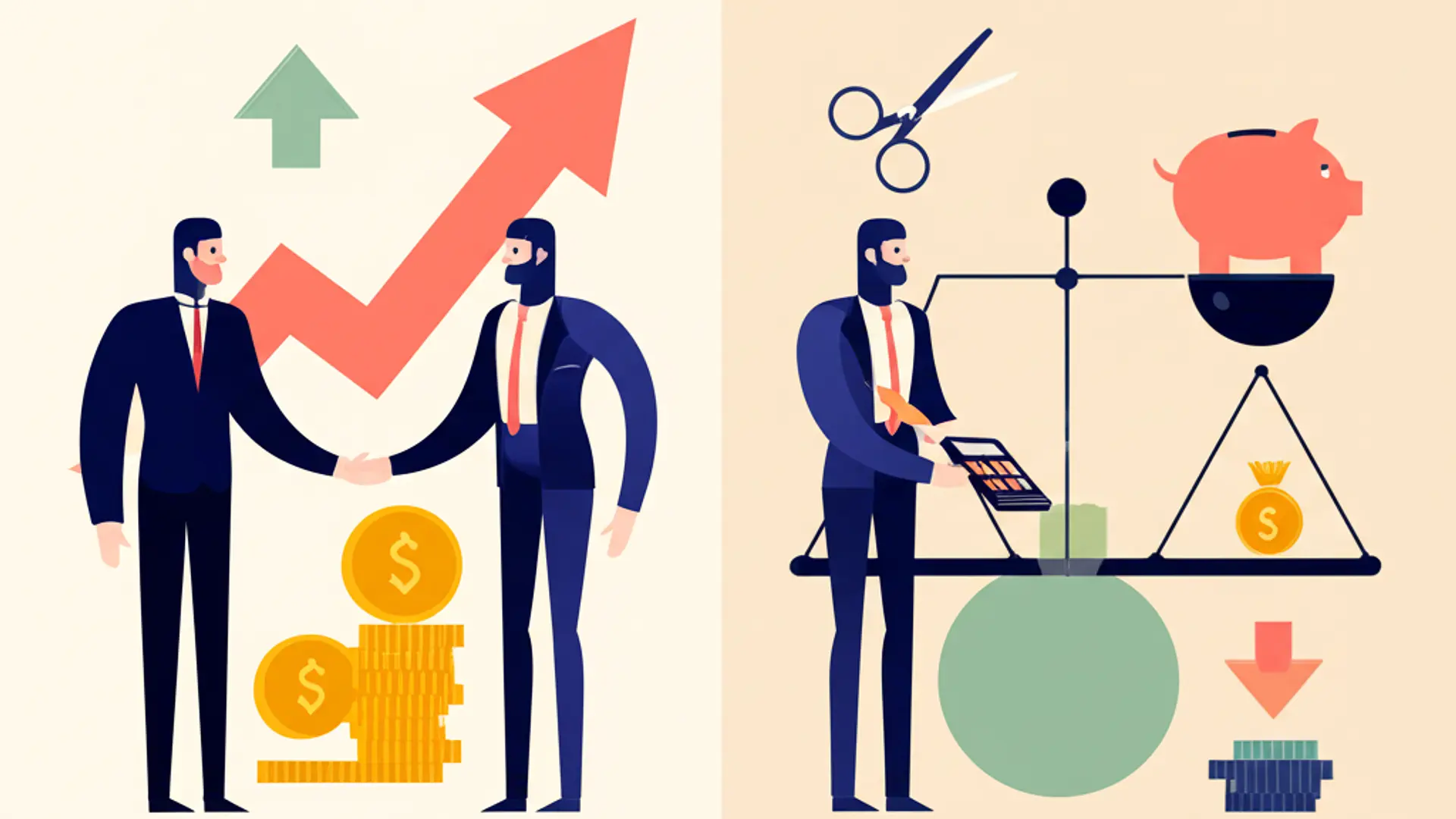
Should I raise or should I reduce burn?
Founders usually come to this question at exactly the wrong moment. Cash is getting tight, growth isn’t compounding the way the model promised, and...
Founders usually come to this question at exactly the wrong moment. Cash is getting tight, growth isn’t compounding the way the model promised, and every conversation with investors seems to end with the same polite non-answer: “Let’s see a bit more traction.” At that point, the instinct is often binary. Either raise now before things get worse, or slam on the brakes and cut burn until the runway looks respectable again. In reality, the right answer is rarely ideological. It’s diagnostic.
Raising capital only makes sense if money is the constraint. That sounds obvious, but many teams confuse discomfort with constraint. If additional capital would directly accelerate something that is already working—customer acquisition that is efficient, sales cycles that are predictable, a product that users are pulling into the market—then raising is rational even if burn feels high. In that case, burn is the byproduct of ambition, not inefficiency. Investors are generally comfortable underwriting burn when they can clearly see how today’s spend becomes tomorrow’s scale. What they are not comfortable underwriting is uncertainty disguised as momentum.
The opposite scenario is more common than founders like to admit. Burn creeps up not because growth is accelerating, but because the company is searching. New hires are made to “figure it out,” marketing spend increases in the hope that one channel will finally click, and product scope expands because focus feels risky. In this case, raising capital rarely fixes the problem. It simply extends the search period while increasing expectations. More money raises the bar. It doesn’t lower it.
Reducing burn is not a failure signal if it is done with intent. The strongest teams cut burn to buy clarity, not time. They reduce spend until the core variables are legible: who the customer actually is, what they are willing to pay for, and what motion reliably converts interest into revenue. From the outside, disciplined burn reduction often makes a company more fundable, not less. A shorter, well-controlled runway paired with crisp metrics is more compelling than a long runway attached to a fuzzy story.
The uncomfortable truth is that raising too early can be more dangerous than cutting too late. Capital locks in a narrative. Once investors are on the cap table, every quarter becomes a comparison against a plan that was likely built with imperfect information. If the company is still in a learning phase, locking in that plan can limit flexibility. Cutting burn preserves optionality. It keeps decisions reversible.
There is, however, a real risk on the other side. Cutting burn without a thesis simply shrinks the company into irrelevance. If reducing spend means starving the one engine that could plausibly create breakout growth, the company may survive longer but emerge weaker. Burn reduction only works when it sharpens focus rather than dulling ambition.
The practical way to decide is to ask a hard question: if you raised a round tomorrow, would you know exactly how to deploy it over the next 18 months? Not in slogans, but in concrete actions tied to measurable outcomes. If the answer is yes, raising may be the right move. If the answer is “we’d have more room to experiment,” that’s a signal to reduce burn instead.
Founders often frame this choice as confidence versus caution. Investors tend to see it as clarity versus noise. Raising is a commitment to a path. Cutting burn is a commitment to finding one. The mistake is choosing either out of fear. The right move is the one that makes the company’s trajectory more legible—to customers, to the team, and eventually, to capital.
Related Articles

Series A Funding: What It Is, What Investors Want, and How to Raise It
Most founders treat Series A like a bigger seed round. It isn't. The investors are different, the bar is different, a...

What Is a Term Sheet? A Founder's Complete Guide to VC Term Sheets
Key takeaways• A term sheet is a non-binding document outlining the key economic and governance terms of a venture in...