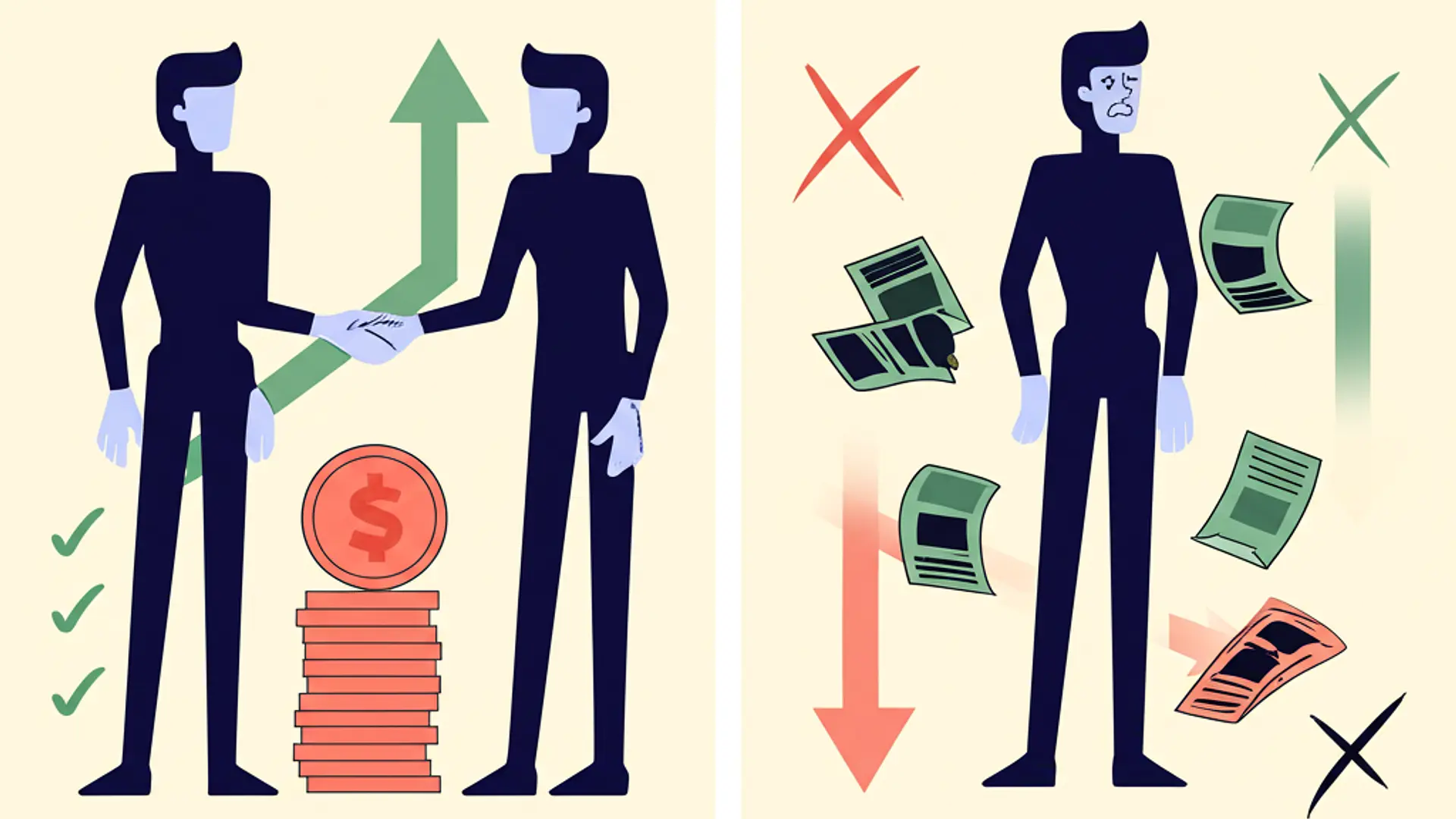
The Do’s and Dont’s of fundraising
Fundraising has a funny way of making rational people act irrationally. Founders who are meticulous about product suddenly become allergic to speci...
Fundraising has a funny way of making rational people act irrationally. Founders who are meticulous about product suddenly become allergic to specificity, swapping real numbers for vibes. Others do the opposite: they treat fundraising like an exam, obsessing over the “right” deck format while avoiding the only thing that actually creates a round... momentum. If you’ve watched enough companies raise (or stall), you start to see that most outcomes aren’t driven by a single pitch meeting. They’re driven by a handful of repeatable do’s and don’ts that shape how investors experience the business.
The first “do” is to decide what story you’re actually telling before you open Keynote. Sequoia’s guidance on presenting to investors is blunt about what matters early: context, fast facts, and a crisp arc that helps an investor place you quickly, what you’re building, where you are, and what you’re asking for.  When a pitch works, it’s not because the founder covered every possible slide; it’s because the investor can retell the company in one clean breath without adding their own filler. That retell is the real product of the meeting. If you can’t control it, you don’t have a pitch—you have a collage.
This is where the first “don’t” shows up: don’t confuse completeness with clarity. Many decks are technically “good” and still fail because they’re trying to win by volume. Investors aren’t scoring you on how many topics you touched. They’re asking whether your thinking is sharp, whether the market pull feels real, and whether the team is moving with conviction. Sequoia makes a similar point in its broader pitching guidance: it isn’t the slides that matter most, it’s the ideas and the clarity behind them.  The deck is just the interface.
The second “do” is to treat the raise like a process you run, not a favor you ask for. Y Combinator’s seed fundraising guide reads less like inspiration and more like operational advice: why you’re raising, when to raise, how to structure outreach, and how to keep the machine moving.  The best founders don’t “talk to investors.” They run a tight funnel. They batch meetings, they control pacing, they build toward a close, and they leave every conversation with a clear next step. If you’re drifting from call to call, you’ll feel busy while your round quietly dies of entropy.
Which leads to the second “don’t”: don’t stretch fundraising across endless weeks because you’re trying to perfect the pitch in private. A round that drags becomes a signal, even if nothing is wrong, because investors compare notes. Momentum is contagious; so is hesitation. When you start, you want enough polish to be coherent, but not so much that you’ve delayed learning from the market. The goal isn’t to sound impressive. The goal is to discover what sophisticated listeners misunderstand, what they challenge, and what actually makes them lean forward.
The third “do” is to anchor the conversation in what investors can underwrite today. In the early stages that might be usage, retention, revenue quality, or even pre-revenue proof that demand exists. Sequoia explicitly recommends laying out key metrics and fast facts early so the investor can interpret everything else in context.  This is also why “vague traction” is so deadly. If you say “great engagement,” you’re forcing the investor to guess what great means. If you say “42% week-8 retention and expanding usage in the top quartile,” you’re giving them something they can triangulate against other companies they’ve seen.
And here’s the third “don’t,” the one that ends relationships: don’t play games with the truth. Investors can handle bad news; what they won’t forgive is learning later that you blurred reality to get a meeting. If churn is high, say why, what you changed, and what’s now improving. If sales cycles are long, show the shape of the pipeline and the leading indicators that shorten it. The fastest way to lose credibility is to hide the only information that matters.
The fourth “do” is to raise in a way that sets you up for the next raise, not just this one. Andreessen Horowitz has framed this as “construct the round” with the future in mind; how much you raise, what the structure implies, and what milestones you can realistically hit before you need capital again.  Great rounds don’t just extend runway; they buy you the right to tell a better story later. You’re not trying to survive. You’re trying to arrive at the next fundraising moment with undeniable progress.
So the fourth “don’t” is predictable: don’t optimize for the highest valuation if it compromises the next chapter. A too-tight runway with an inflated price tag can trap you. A complicated structure can spook future investors. Terms are not trivia; they shape your degrees of freedom. The founders who win long-term treat fundraising like product strategy: tradeoffs, sequencing, and optionality.
The fifth “do” is to be intentional about who you invite into the room. Fundraising is not a popularity contest; it’s partner selection. YC’s materials emphasize the practical reality that different investors are a fit at different stages and that the “how” of raising is inseparable from the “who.”  The strongest founders act like curators. They know which firms lead, which follow, who understands their market, and who will actually help when things get weird—which, to be clear, is most of the time.
The corresponding “don’t” is to spray your deck to everyone and hope someone bites. Aside from being inefficient, it turns your company into gossip. Investors talk. If your narrative is evolving (as it should), a scattershot approach means ten different versions of your company are now living inside other people’s heads. If you want control, you need sequencing: start with a small set, learn, tighten, then bring the refined story to the names that matter most.
If all of this sounds like discipline, it’s because fundraising rewards founders who can make a chaotic process feel inevitable. The irony is that the “dos” aren’t hacks. They’re the same fundamentals you’d apply to building anything: clear positioning, honest metrics, tight iteration loops, and a deliberate plan. The “don’ts” are what happen when the pressure of capital makes you abandon your own operating principles.
The founders who raise well aren’t magically better presenters. They’re better operators under scrutiny. They understand that investors don’t fund decks, they fund trajectories. And the best fundraising, when you zoom out, is just the art of making that trajectory legible. 
Tagged with:
Related Articles

Series A Funding: What It Is, What Investors Want, and How to Raise It
Most founders treat Series A like a bigger seed round. It isn't. The investors are different, the bar is different, a...

What Is a Term Sheet? A Founder's Complete Guide to VC Term Sheets
Key takeaways• A term sheet is a non-binding document outlining the key economic and governance terms of a venture in...